Eyes on the Prize II: America at the Racial Crossroads 1965-1985

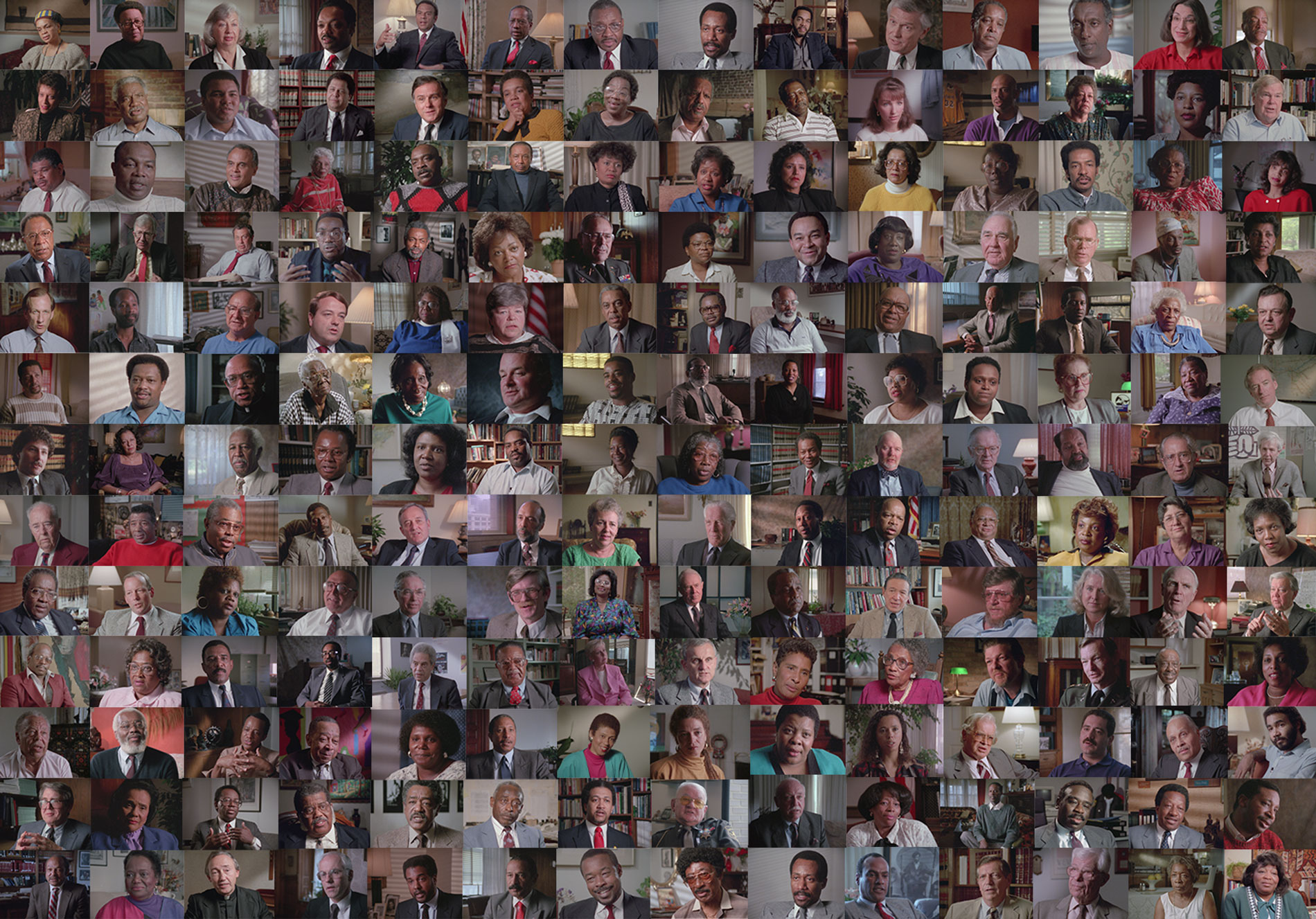
Eyes on the Prize II: America at the Racial Crossroads 1965-1985 Interviewees

Eyes on the Prize II: America at the Racial Crossroads 1965-1985 Subject Index (pdf file)

Through historical footage and contemporary interviews these eight hour-long programs examine the triumphs and failures of individuals and communities eager to give flesh to the movement's hard-won gains. The series also probes the transition to a more challenging time in this country's social history.

Eyes on the Prize II takes viewers from the streets of Malcolm X's Harlem to Oakland and the birth of the Black Panthers; from the frustrations of rioters in Detroit and Miami to the victory celebration for Harold Washington, Chicago's first black mayor; from ringside with Muhammad Ali to the "Mountain Top" speech of Martin Luther King on the eve of his assassination.

The Time Has Come (1964-1966) -- reveals a new ideology within the civil rights movement, the insistent call for power, as it gains popularity among black Americans. Malcolm X and the Nation of Islam strike a resonant chord in New York. Its echoes can be heard in the South, where the Student Non-violent Coordinating Committee (SNCC) turns the class for "Freedom Now!" into one for "Black Power."

Key interviews:

In Two Societies (1965-1968) -- the movement comes north. Martin Luther King and the Chicago Freedom Movement confront the Daley machine with mixed results as he battles segregated housing in Chicago. Pent-up anger explodes in Detroit, where a week of rioting leaves 43 dead. One resident recalls on the first day of the riot, "When my daughter got to church she called back and said, ‘Momma, it's Judgement Day…everything is burning.'"

Key interviews:

Power! (1966-1968) -- explores three paths taken to power. In Clevland, the ballot box lifts Carl Stokes to the office of mayor. The Black Panthers take up law books, breakfast programs, and guns in Oakland. For a time, parents win educational control of their public school district in Brooklyn.

Key interviews:

The Promised Land (1967-1968) -- charts Martin Luther King's often overlooked final year, from his declaration of opposition to the war in Vietnam, through the beginning of his Poor People's Campaign, to his 1968 assassination in Memphis. As Martin Luther King said shortly before his death, "This is America's opportunity to help bridge the gap between the haves and have-nots…but the real questions is whether we have the will."

Key interviews:

InAin't Gonna Shuffle No More (1964-1972) -- a new sense of black pride and black consciousness is evidenced by a prizefighter name Cassius Clay (a.k.a. Muhammad Ali), on the campus of Howard University in Washington, DC, and at the National Black Political Convention in Gary, Indiana. Harry Belafonte says of Ali, "[He] was the embodiment of the thrust of the movement…He didn't care about money. He didn't care about the white man's success…He brought America to its most wonderful and most naked moment. [He said] I will not play your game. I will not kill in your behalf."

Key interviews:

A Nation of Law? (1968-1971) -- reveals the sometimes violent and unethical measures that law enforcers used to answer black political demands. The program explores the killing of two Black Panther leaders in Chicago and the rebellion at New York's Attica state prison that left 43 dead.

Key interviews:

The Keys to the Kingdom (1974-1980) -- antidiscrimination laws are put to the test. Boston's schools are ordered to desegregate, but some whites resist violently. Affirmative Action scores a victory in Atlanta but is challenged with the Bakke Supreme Court case.

Key interviews:

Back to the Movement (1979-mid 1980s) -- the powerlessness of Miami's black community motivates rioting in the Liberty City section. But in Chicago, an unprecedented grassroots crusade empowers the black community and takes Harold Washington to victory as the city's first black mayor. The series ends with a look back at the people who made this movement a force for change in America.

Key interviews:

Premiere: Monday, January 15, 1990 PBS